We need to talk about our AI fetish

By | July 3, 2024

Artificial intelligence puts us in a bind that in some ways is quite new. It’s the first serious challenge to the ideas underpinning the modern state: governance, social and mental health, a balance between capitalism and protecting the individual, the extent of cooperation, collaboration and commerce with other states.

How can we address and wrestle with an amorphous technology that has not defined itself, even as it runs rampant through increasing facets of our lives? I don’t have the answer to that but I do know what we shouldn’t do.

The streets

But in other ways we have been here before, making the same mistakes. Only this time it might not be reversible.

Back in the 1920s, the idea of a street was not fixed. People “regarded the city street as a public space,open to anyone who did not endanger or obstruct other users”, in the words of Peter Norton, author of a paper called ‘Street Rivals’ that later became a book, ‘Fighting Traffic.’ Already, however, who took precedence was already becoming a loaded — and increasingly bloody — issue. ‘Joy riders’ took on ‘jay walkers’, and judges would usually side with pedestrians in lawsuits. Motorist associations and the car industry lobbied hard to remove pedestrians from streets and for the construction of more vehicle-only thoroughfares. The biggest and fastest technology won — for a century.

Bangkok traffic, photo by Joan Campderrós-i-Canas

Only in recent years has there been any concentrated effort to reverse this, with the rise of ‘complete streets’, bicycle and pedestrian infrastructure, woonerfs and traffic calming. Technology is involved — electric micro-mobility provides more options for how people move about without involving cars, improved VR and AR helps designers better visualise what these spaces would look like to the user, modular and prefabricated street design elements and the adoption of thinking such as ‘tactical urbanism’ allows local communities to modify and adapt their landscape in short-term increments.

We are getting there slowly. We are reversing a fetish for the car, with its fast, independent mobility, ending the dominance of a technology over the needs and desires of those who inhabit the landscape. This is not easy to do, and it’s taken changes to our planet’s climate, a pandemic, and the deaths of tens of millions of people in traffic accidents (3.6 million in the U.S. since 1899). If we had better understood the implications of the first automobile technology, perhaps we could have made better decisions.

Let’s not make the same mistake with AI.

Not easy with AI

We have failed to make the right choices because we let the market decide. And by market here, we mean as much those standing to make money from it, as consumers. We’re driven along, like armies on train schedules

Admittedly, it’s not easy to assess the implications of a complex technology like AI if you’re not an expert in it, so we tend to listen to the experts. But listening to the experts should tell you all you need to know about the enormity of the commitment we’re making, and how they see the future of AI. And how they’re most definitely not the people we should be listening to.

First off, the size and impact of AI has already created huge distortions in the world, redirecting massive resources in a twin battle of commercial and nationalist competition.

  • Nvidia is now the third largest company in the world entirely because its specialised chips account for more than 70 percent of AI chip sales.
  • The U.S. has just announced it will provide rival chip maker Intel with $2o billion in grants and loans to boost the country’s position in AI.
  • Memory-maker Micro has mostly run out of high-bandwidth memory (HBM) stocks because of the chips usage in AI — one customer paid $600 million up-front to lock in supply, according to a story by Stack.
  • Data centres are rapidly converting themselves as into ‘AI data centres’, according to a ‘State of the Data Center’ report by the industry’s professional association AFCOM.
  • Back in January the International Energy Agency forecast that data centres may more than double their electrical consumption by 2026. (Source: Sandra MacGregor, Data Center Knowledge)
  • AI is sucking up all the payroll: Those tech workers who don’t have AI skills are finding fewer roles and lower salaries — or their jobs disappearing entirely to automation and AI.. (Source: Belle Lin at WSJ
  • China may be behind in physical assets but it is moving fast on expertise, generating almost half the worlds top AI researchers (Source: New York Times).

This is not just a blip. Listen to Sam Altman, OpenAI CEO, who sees a future where demand for AI-driven apps is limited only by the amount of computing available at a price the consumer is willing o pay. “Compute is going to be the currency of the future. I think it will be maybe the most precious commodity in the world, and I think we should be investing heavily to make a lot more compute.”

In other words, the scarcest resource is computing to power AI. Meaning that the rise in demand for energy, chips, memory and talent is just the beginning. “There’s a lot of parts of that that are hard. Energy is the hardest part, building data centers is also hard, the supply chain is hard, and then of course, fabricating enough chips is hard. But this seems to be where things are going. We’re going to want an amount of compute that’s just hard to reason about right now.” (Source: Sam Altman on Lex Fridman’s podcast)

Sam Altman, 2022. Photo courtesy of Village Global

Altman is probably the most influential thinker on AI right now, and he has huge skin in the game. His company, OpenAI, is currently duking it out with rivals like Claude.ai. So while it’s great that he does interviews, and that he is thinking about all this, listening to only him and his ilk is like talking to motor car manufacturers a century ago. Of course they’ll be talking about the need for more factories, more components — and more roads. For them, the future was their* technology. They framed problems with the technology in their terms, and painted themselves as both creator and saviour. AI is no different.

So what are the dangers?

Well, I’ve gone into this in past posts, so I won’t rehash them here. The main point is that we simply don’t enough to make sensible decisions on how to approach AI.

Consider the following:

  • We still don’t really know how and why AI models work, and we’re increasingly outsource processes of improving AI to the AI itself. Take, for example, Evolutionary Model Merge, an increasingly popular technique to combine multiple existing models to create a new one, adding further layers of complexity and opacity to an already opaque and complex system. “The central insight here,” writes Harry Law in his Learning from Examples newsletter, “is that AI could do a better job of determining which models to merge than humans, especially when it comes to merging across multiple generations of models.”
  • We haven’t even agreed on what AI is. There is as yet no science of AI. We don’t agree on definitions. Because of the interdisciplinary nature of AI it can be approached from different angles, with different frameworks, assumptions and objectives. This would be exciting and refreshing were it not simultaneously impacting us all in fast moving ways.
  • We don’t really know who owns what. We can only be sure of one thing: the big fellas dominate. As Martin Peers wrote in The Information’s Briefing (sub required):”It is an uncomfortable truth of the technology industry currently that we really have little clue what lies behind some of the world’s most important partnerships. Scared about regulators, Big Tech is avoiding acquisitions by partnerships that “involve access to a lot of the things one gets in acquisitions.” Look at Microsoft’s multi-billion dollar alliance with OpenAI and, more recently, with Inflection AI.

Not only does this concentrate resources in the hands of the few, it also spurs the ‘inevitability of the technology’, driven by those dominant companies who have sunk the most into it driven by dreams of the profitability that may come out of it . In short, we’re in danger of imposing a technological lock-in or path dependence which not only limits the range of technologies on offer, but, more seriously, means the most influential players in AI are those who need some serious returns on their investment, colouring their advice and thought leadership.

We’re throwing everything we’ve got at AI. It’s ultimately a bet: If we throw enough at AI now, it will solve the problems that arise — social, environmental, political, economic — from throwing everything we’ve got at AI.

We’ve been here before

The silly thing about all this is that we’ve been here before. Worrying about where AI may take us is nothing new. AI’s ‘founders’ — folk like John von Neumann, I.J. Good — knew where things were going: science fiction writer and professor Vernon Vinge, who died this month, coined the term singularity, but he was not the first to understand that there will come a point where the intelligence that humans build into machines will outstrip human intelligence and, suddenly and rapidly, leave us in the dust.

Why, then, have we not better prepared ourselves for this moment? Vinge first wrote of this more than 40 years ago. In 1993 he even gave an idea of when it might happen — between 2005 and 2030. Von Neumann, considered the father of AI, saw the possibility in the 1950s, according to Polish-born nuclear physicist Stanislav Ulam, who quoted him as saying:

The ever-accelerating progress of technology and changes in the mode of human life give the appearance of approaching some essential singularity in the history of the race beyond which human affairs, as we know them, could not continue.

The problem can be explained quite simply: we fetishise technological progress, as if it is itself synonymous with human progress. And so we choose the rosiest part of a technology and ask users: would you not want this? What’s not to like?

The problem is that this is the starting point, the entry drug, the bait and switch, for something far less benevolent.

Economist David McWilliams calls it the dehumanisation of curiosity — as each new social technology wave washes over us, it demands less and less of our cognitive resources until eventually all agency is lost. At first Google search required us to define what it was that we wanted; Facebook et al required us to do define who and what we wanted to share our day with, and Twitter required us to be pithy, thoughtful, incisive, to debate. Tiktok just required us to scroll. At the end it turned out the whole social media thing was not about us creating and sharing wisdom, intelligent content, but for the platforms to outsource the expensive bit — creating entertainment — to those who would be willing to sell themselves, their lives, hawking crap or doing pratfalls.

AI has not reached that point. Yet. We’re in this early-Google summer where we have to think about what we want our technology to do for us. The search prompt would sit there awaiting us, cursor blinking, as it does for us in ChatGPT or Claude. But this is just a phase. Generative AI will soon anticipate what we want, or at least a bastardised version of what we want. It will deliver a lowest-common denominator version which, because it doesn’t require us to say it out loud, and so see in text see what a waste of our time we are dedicating to it, strip away while our ability to compute — to think — along with our ability, and desire, to do complex things for which we might be paid a salary or stock options.

AI is, ultimately, just another algorithm.

We need to talk

We need to think hard about not just AI, but what kind of world we want to live in. This needn’t be an airy-fairy discussion, but it has to be one based on a human principles, and a willingness of those we have elected to office to make unpopular decisions. When back in 1945 UK Prime Minister Clement Atlee and his minister Aneurin Bevan sought to build a national health service free to all, they faced significant entrenched opposition — much of it from sources that would later change their mind. The Conservative Party under Winston Churchill voted against it 21 times, with Churchill calling it “a first step to turn Britain into a National Socialist (Nazi) economy.” (A former chairman of the British Medical Association used similar language). Doctors voted against it 10:1. Charities, churches and local authorities fought it.

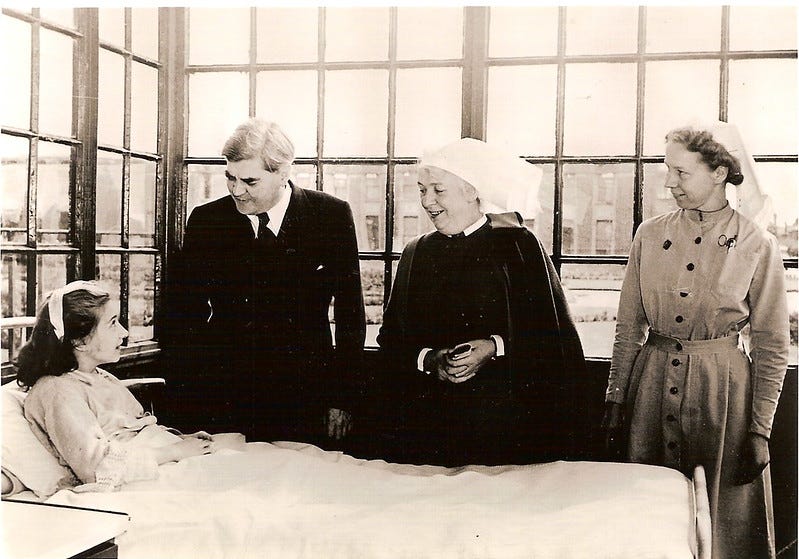
Anenurin Bevan, Minister of Health, on the first day of the National Health Service, 5 July 1948 at Park Hospital, Davyhulme, near Manchester. Photo courtesy University of Liverpool

But Bevan won out, because as a young miner in the slums of southern Wales, he had helped develop the NHS in microcosm: a ‘mutual aid society’ that by 1933 was supplying the medical needs of the 95% of the local population, in return for a subscription of pennies per week. Bevan had seen the future, understood its power, and haggled, cajoled and mobilised until his vision was reality. The result: one of the most popular British institutions, and a clear advantage over countries without a similar system: In 1948 infant mortality in the UK and US was more or less the same — around 33 deaths per 1,000 live births. By 2018 the number had fallen to 3.8 in the UK, but only to 5.7 for the United States. That’s 1.3 million Brits that survived being born, according to my (probably incorrect) maths. (Sources: West End at WarHow Labour built the NHS – LSE)

AI is not so simple. Those debating it tend to be those who don’t understand it at all, and those who understand it too well. The former fish for sound-bites while the latter — those who build it — often claim that it is only they who can map our future. What’s missing is a discussion about what we want our technology to do for us. This is not a discussion about AI; it’s a discussion about where we want our world to go. This seems obvious, but nearly always the discussion doesn’t happen — partly because of our technology fetish, but also because entrenched interests will not be honest about what might happen. We’ve never had a proper debate about the pernicious effects of Western-built social media, but our politicians are happy to wave angry fingers at China over TikTok.

Magic minerals and miracle cures

We have a terrible track record of learning enough about a new technology to make an informed decision about what is best for us, instead allowing our system to be bent by powerful lobbies and self-interest. Cars are not the only example. The building industry knew there were health risks associated with asbestos since the 1920s, but it kept it secret and fought regulation. Production of asbestos — once called the ‘magic mineral’ — production kept rising, only peaking in the late 1970s. The industry employed now-familiar tactics to muzzle dissent: “organizing front and public relations companies, influencing the regulatory process, discrediting critics, and manufacturing an alternative science (or history).” (Source: Defending the Indefensible, 2008) As many as 250,000 people still die globally of asbestos-related diseases each year — 25 years after it was banned in the UK.

Operator Clémence Gagnon watches a machine carding asbestos fibre, Johns Manville factory, Asbestos, Que., 1944 Photo courtesy of Library and Archives Canada

Another mass killer, thalidomide, was promoted and protected in a similar manner. Its manufacturers, Chemie Grünenthal, “definitely knew about the association of the drug with polyneuritis (damage to the peripheral nervous system)” even before it brought it to market. Ignoring or downplaying reports of problems, the company hired a private detective to discredit critical doctors, and only apologised for producing the drug, and remaining silent about the defects in 2012. (Source: The Thalidomide Catastrophe, 2018)

I could go on: leaded gasoline, CFCs, plastics, agent orange. There are nearly always powerful incentives for companies, governments or armies to use a technology even after they become aware of its side-effects. In the case of tetraethyl lead in cars, the U.S. Public Health Service warned of its menace to public health in 1923, but that didn’t stop Big Oil from setting up a corporation the following year to produce and market leaded gasoline, launching a PR campaign to promote its supposed safety and discredit its critics, while funding research which downplayed health risks and and lobbying against attempts to regulate. It was only banned entirely in 1996.

An AI Buildup

We are now at a key inflection point. We should be closely scrutinising the industry to promote competition, but we should also be looking at harms, and potential harms — to mental health, to employment, to the environment, to privacy, to whether AI represents an existential threat. But instead Big Tech and Big Government are focusing on hoarding resources and funding an ‘AI buildup.’ In other words, just at a time when we should be discussing how to direct and where to circumscribe AI we are locked in an arms race where the goal is to achieve some kind of AI advantage, or supremacy.

AI is not a distant concept. It is fundamentally changing our lives at a clip we’ve never experienced. To allow those developing AI to lead the debate about its future is an error we may not get a chance to correct.

Yes, we should care about Julian Assange

By | July 3, 2024
img
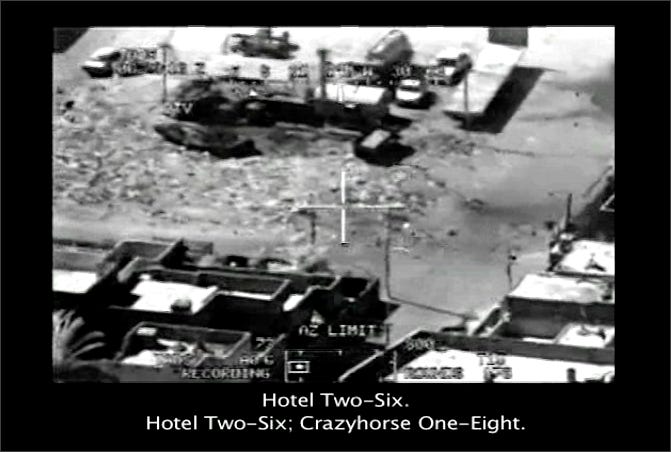
Still from Annotated short version, Collateral Murder, WikiLeaks

It’s easy for most people — journalists included — to look the other way as Julian Assange’s case grinds to its (likely) grim end. He doesn’t fit neat holes — is he a journalist? An activist? A political operator? A source? An intermediary? A publisher? A whistleblower?

This means that those who are supporting his case are a rather motley bunch, from the left (the late John Pilger, Jeremy Corbyn, Noam Chomsky) to the far right (Tucker Carlson, Sarah Palin, for example). And then there are people in the middle, who feel that both principles and laws are being trampled upon. (Opposition to Assange is also a varied crowd, including Hillary Clinton and Mitch McConnell.)

This should create a broad coalition, but opinion towards Assange is not fixed. When a UN panel ruled in 2016 that Assange had been held arbitrarily by the UK and Sweden, two thirds of Britons surveyed disapproved the ruling. While there was crowd outside the court for deliberation on his extradition, a petition to grant amnesty to Assange posted on Avaaz.org in 2019, has been unable to reach 300 signatures and his name is nowhere to be found on the website’s homepage. Indeed, the sheer length of Assange’s case — running for 14 years now, since Swedish prosecutors issued an arrest warrant for him in 2010 — makes consistent support and publicity for his case difficult.

Chilling episode

So why should we care?

Whatever happens to him, Assange will leave a significant legacy. He changed journalism in a way most of us in the profession are reluctant to acknowledge. It’s now commonplace for journalists and newsrooms to actively solicit secret documents, and advertise the lengths they will go to to protect the source. While investigative journalism didn’t start with Assange, he helped usher in a minor revolution in the occupation — not least by the trove of stories written based on Wikileaks material. Journalists, in the words of Christian Christensen, a Sweden-based professor of media studies, should recognise that “Assange was a key part in the journalistic process, and by criminalising his participation you thereby criminalise that process.”

In my view, there’s one thing that Assange did that makes his freedom a moral requirement. It is his release on April 5 2010 of a video that Wikileaks called “Collateral Murder.” The 39-minute video, obtained by Chelsea Manning, is the view of a Baghdad street from an Apache helicopter gun-sight on July 12 2007, and in Wikileaks’ words “clearly shows the unprovoked slaying of a wounded Reuters employee and his rescuers.” The video, and the accompanying radio-chatter, combine to engrave a chilling episode in the history of warfare, comparable to the images of a Vietnamese girl, Kim Phúc, caught in a US napalm attack, the torture of Abdou Hussain Saad Faleh and other Iraqi prisoners in Abu Ghraib, or the image of the body of Syrian refugee Alan Kurdi, 3, washed up on a Turkish beach in 2015.

There’s a long backstory to (and fallout from) this case which I won’t repeat here. But certain points are worth stressing (I should declare an interest; I am a former Reuters employee, and I am friends with Dean Yates, the Reuters bureau chief in Baghdad at the time of the incident. Much of the following is taken from his 2023 book Line in the Sand; a statement by Dean was submitted to the court currently considering Assange’s extradition).

Hostile intent

Reuters had been shown only a small fraction of the recording in the wake of the killing, which in isolation seemed to support the US army argument that the helicopter crew had good reason to believe the group, which included two Reuters journalists Saeed Chmagh and Namir Noor-Eldeen, also had among them a man apparently carrying a rocket-propelled grenade, or RPG. They could be ‘engaged,’ Dean is told, because the presence of supposedly armed men was an expression of ‘hostile intent.’

Reuters was not allowed to keep a copy of the video or any of the material shown to Dean, and the company had been trying to obtain the video through legal channels unsuccessfully up to the time of its release by Wikileaks. The U.S. had blocked such requests at every turn, telling anyone who asked that it couldn’t be found.

The release of the full video by Wikileaks three years later showed several things: firstly, that the subsequent attack on the family trying to rescue the injured likely broke not only the Geneva Convention on attacking wounded, but also the military’s own rules of engagement. In his book Dean describes the video this way:

“It was pure truth-telling. No military officials could deflect, sanitise, provide ‘context’. There is also no tape like it from any war in history in public domain.”

This public domain aspect is key, and perhaps goes to the heart of Assange’s take-no-prisoners approach. Dean points out the only comparable video of an alleged war-crime happening is the execution of a communist Vietnamese prisoner, Nguyễn Văn Lém, by South Vietnam’s police chief Nguyễn Ngọc Loan on 1 February 1968. A photo of the moment when the is accessible enough, but the video remains the property of NBC and can only be obtained with special permission. “Everyone remembers the Pulitzer Prize-winning photo by Eddie Adams,” writes Dean. “But not the footage because it’s not a mouse-click away.”

img

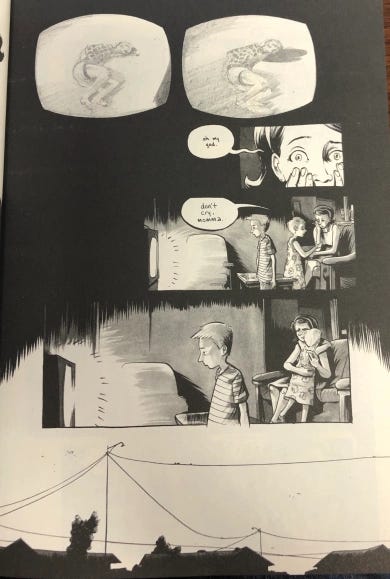
Watching the execution of Nguyễn Văn Lém: from Mark Long, Jim Demonakos, and Nate Powell’s The Silence of Our Friends, via Interminable Rambling

Moving snapshot

When the video was first aired on NBC in 1968 it “led people to see major problems with the war,” in the words of Safia Swimelar, Political Science and Policy Professor at Elon University. “Many have said that photo and video also just illustrated the moral ambiguity of the war, since it showed that both sides were engaged in violence and possible war crimes.”

By making the Iraq video available with a mouse click, it could be argued Assange has ‘cheapened’ the content, desensitising us to its horror. But probably the opposite is true. We know that it’s there, a defiant finger to the authorities that tried to hide it from the families of the deceased and others seeking the truth about what happened, and, more generally, what the war in Iraq really looked like. It’s understandable that NBC wants to maximise its asset, but it could also be argued that it should by now — 56 years later — at least be in the public domain, a moving snapshot of the Vietnam War as much as Collateral Murder has come to define the Iraq conflict.

Neutral technology

It’s also clear that the U.S. knows it is on shaky ground. While it formed a key part of Chelsea Manning’s indictment, the video is not mentioned anywhere in Assange’s indictments. It’s likely that the U.S. really doesn’t want to go down that route: Much of the rest of Wikileaks’ (and Manning’s) material is that it shows professionals — soldiers, diplomats, analysts, spies — going about their work.

The secrets revealed, whether or not they’re in the public interest, are those that might embarrass a government or highlight its hypocrisy, or possibly endanger a U.S. official going about their proper business. Collateral Murder, on the other hand, exposes something different: not just the abuse of existing rules of engagement, but the absurdity of the “notion of neutral technology at the service of human development,” in the words of Christian Christensen, in a 2014 paper on the ‘afterlife’ of the video. Armies make particular effort to characterise their weaponry as smart in their behaviour, surgical in their impact, and while most of us know this is not really the case, it takes behind-the-scenes videos like this to remind us. Technology in war rarely reduces the harmfulness of a weapon, least of all for bystanders.

Secrets impose a cost, usually on the victim or their loved ones. To properly understand their wound they need to understand what happened, and why. For Dean the video’s release began a journey, illustrating on a micro-scale how the truth, however unpalatable, can set you free. Dean has struggled with PTSD and its brother moral injury, in part because he had not come to terms with the incident and his own feelings about the two men he lost on his watch. The release of the video — the full, unvarnished truth of the incident as it unfolds — highlights how damaging the keeping of secrets can be. In his struggle to come to terms with his PTSD Dean sought the forgiveness of the families of Saaed and Namir, and also tried to reach out to the occupants of the Apache as well, hoping they might share their stories too, and “help the healing” of everyone involved, including themselves.

It’s understandable the U.S. doesn’t want to start discussing all this in public again. But it also helps illustrate a truism that we too readily forget: that governments keep secrets for the wrong reasons — usually to conceal from their own citizens that rules have been broken. But at the same time it goes out of its way to punish as severely as it can any individual like Manning or Assange — pour encourager les autres. That, so far, hasn’t worked: Think of all the whistleblowers who have followed in Assange’s wake — Snowden, Antoine Deltour (LuxLeaks), Maria Efimova (Malta), Reality Winner (NSA), Frances Haugen (Facebook), Hervé Falciani (HSBC), Rudolf Elmer (Julius Baer), the still anonymous Panama Papers leaker, Xavier Justo (1MDB), Howard Wilkinson (Danske Bank), nearly all of whom have through their bravery helped launch investigations and/or changes in policy, despite great peril to themselves and the journalists who report their stories. (Maltese investigative journalist Daphne Caruana Galizia was assassinated in 2017 for her work based on Efimova’s whistleblowing.)

Do we deserve the sacrifice?

By releasing the video Manning and Assange wrote themselves into the history books, showing the graphic truth of what advanced U.S. military power looks like in practice. Perhaps, 14 years on, we are still too close to it to recognise the impact of that truth — or perhaps we have too readily forgotten it. Both understood the gravity of the material in their hands — after retrieving the video Chelsea Manning immediately searched for the rules of engagement each occupant of the helicopter would have been carrying — but perhaps neither may have thought too deeply about the personal sacrifice they would ultimately be making. We should not blame them for that.

img

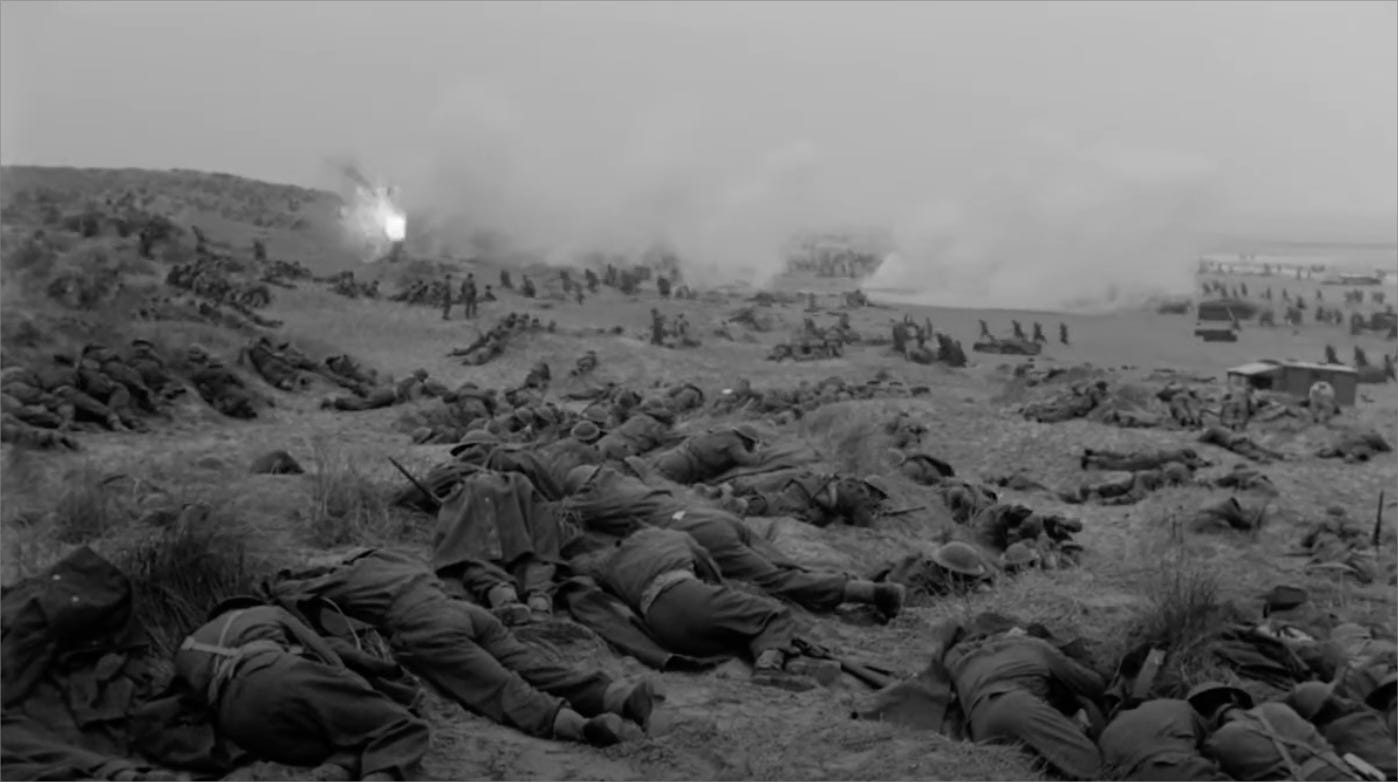
Still from Dunkirk (1958) , directed by Leslie Norman

In 1958 Michael Balcon of Ealing Studios produced a fictional film based around the evacuation of Dunkirk, not because he wanted to eulogise the recent past, but because he wanted to disturb audiences, which he felt by the late 1950s had grown complacent, individualistic, unworthy of the sacrifices made for their benefit. He wanted them to ask themselves: “Was Dunkirk worthwhile? Have we deserved the sacrifice? Do we remember what war is?” Assange’s fate is in our hands, and Collateral Murder is the evidence of sacrifices made — both by the people killed or wounded that day, and by a handful of individuals to bring that crime to light — that we should not ignore.

Why do journalists destroy those they love?

By | February 16, 2024

There’s a moment in Lynn Alleway’s documentary “Camila’s Kids Company: The Inside Story where Camila Batmanghelidjh emerges from a UK parliamentary grilling and the paparazzi are there, calling out her name as if they know her personally — “Camila! Camila!” — to get the best shot. Batmanghelidjh stands on the steps of the building, her smile wobbling. This moment would mark the end of her career as what one Labour MP called the “poster girl” for a new way of helping those in need. It also marked the beginning of the end of her life.

I explore her case to illustrate another chapter in “How Journalists Think“, with the question: Why does journalism tend to destroy those it once adored? How do these stories develop in the newsroom, and is it something that can be anticipated by those trying to protect those figures from public damnation?

Perhaps that’s too facile a way of putting it. Boiled down, the arc is this: Journalists are always looking for something — or someone — remarkable, that allow themselves to become, or courts the media in helping them become, a ‘celebrity’ figure. In a lot of cases the celebrity status is the end in itself, but it can also be a means to an end. For such people being a celebrity is a useful step in serving some other purpose — usually promoting something they are trying to sell. In the case of Batmanghelidjh, it was trying to sell a new approach in helping the disadvantaged to deep-pocketed politicians and high-net worth individuals (including celebrities.)

Squeeze out the anger

The story of Camila Batmanghelidjh is, briefly this (here’s a much better telling of her story): A Iranian-Belgian, she was educated in England and made it her home. She developed an approach for abused and damaged kids that was startlingly different to how others looked at them: embrace them, she preached. And she would, squeezing a lot of the anger and hatred out of those she worked with. She also believed in giving out cash: she was extremely generous with those she felt needed her largesse, arguing that having, not just basic necessities, but also nice things was part of restoring self-esteem.

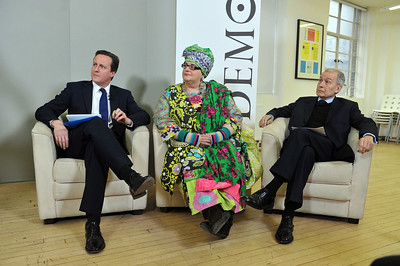
UK PM David Cameron and Labour MP Frank Field with Batmanghelidjh, in Liverpool, 2010 (Demos, CC)

She made enemies from the get-go, but she also made powerful friends, and where she could she used those connections to draw funding, expanding her small charity in Peckham to a multi-million pound operation that at its height, she said, was looking after 36,000 ‘clients.’ She was showered with awards and high-profile photo-ops. Her fall from grace was fast: allegations of abuse piled onto allegations of financial mismanagement, and, although she and the charity were largely exonerated, that came too late to save either. Batmanghelidjh died on January 1, 2024, less than a decade after Kids Company had collapsed.

For a journalist there are five main phases to her story.

  • Niche: interest is largely confined to specialist media and journalists covering poverty, inner cities, social benefits etc. Her dramatic profile may actually work against her at this point, because it may be considered frivolous and attention-seeking. A word like ‘controversial’ might be used in coverage, which can have both good and bad connotations. Being controversial means the subject is worthy of coverage in the journalists’ mind.
  • Media Darling: As soon as she appears in public alongside senior politicians (including prime ministers and future kings) she enters a different kind of coverage, covered by a different kind of journalist. At this point she becomes a visual and written subject in her own right, and courting the media has advantages for both sides. She is able to attract funding on the back of this, and that in turn becomes part of her media appeal.
  • Pivot point: She will also attract the counter-force by those questioning the veracity of her claims, and those journalists who spot a possibility of challenging the image she now has in the media. This is the point at which things could go either way. The investigative stuff will force other journalists to include language like “sometimes controversial” as they prod the edges of their previously positive coverage: given the established nature of the story words like “controversial” are no longer a good thing.
  • The Slide from Grace: Momentum builds and if there’s enough material, the negative stories will pile up on one another inexorably. This is where Batmanghelidjh loses control of how she is perceived and gradually (and sometimes quickly) the tide will turn against her, and journalists who once wrote positively about her will fade away.
  • Coup de grâce: This is when journalists draw a line under the story, where essentially the subject is covered with their name preceded by words like scandal-hit, disgraced, bankrupt and where that becomes the justification for the story. No longer is the subject able to affect how journalists cover the story. In Batmanghelidjh’s case, this period lasted from late 2015 to her death.

The demon of Peckham

I’m not saying that these are the only stories to be told, but a journalist swimming against the tide in any particular phase will find it a hard sell to editors. A journalist in the first phase would probably approach it as a visual story, as Batmanghelidjh was photogenic, charismatic and playful. This would help move the story from the ‘community’ pages to the more commanding ‘social’ pages. Likewise, once the negative reports start to ooze out it would be a brave journalist who might try to write a ‘yes, but’ story which presented Batmanghelidjh’s case that the charges were politically motivated and without substance.

Something worth noting here: a symbiosis can emerge where journalists find themselves in alliance with groups within the story. Batmanghelidjh won a lot of friends and attracted a lot of funding, but that in turn put noses out of joint, and may also have raised legitimate concerns about her work. The journalists who were first to follow up on sources or hunches that not all was as it seemed fed their findings to local councillors, creating a positive feedback loop in which both were emboldened to investigate claims.

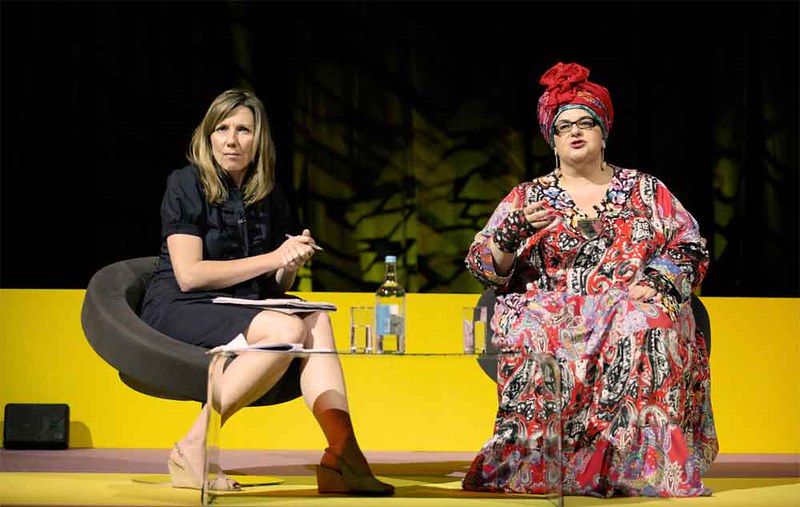
Camila Batmanghelidjh plenary questions with Sarah Montague, NHS Confederation annual conference & exhibition 2011, creative commons

It’s instructive to watch the documentary to see how Batmanghelidjh handled all this. She courted Alleway, a documentary maker who had previously released a glowing documentary about her a decade earlier, to follow her and video the process by which she hoped to spike the guns of her detractors and turn her financial problems around. It’s clear early on that while she directs events as much as she can, she is severely underestimating the hole she is in, and even a sympathetic documentary maker starts to lose faith both that Batmanghelidjh will manage her conjuring trick — and that she is being wholly honest about where the money is going. It’s a painful ride. Batmanghelidjh seemed to grasp the Shakespearian dynamics of her story but not the need to take her detractors seriously: “It’s revenge, round one,” she tells Alleway. “They are about to murder the very thing that works.” And then, later: “They made me the angel of Peckham and now they’re going to make me the demon of Peckham.”

“This one is bad”

Batmanghelidjh does have a media strategist and head of PR, but it’s clear that he has little control over what Batmanghelidjh says or does — even, I sense, over whether he was consulted about allowing a documentary maker fly-on-the-wall access. His efforts to tighten whatever is coming out of the charity in emails and statements, let alone what is coming out of Batmanghelidjh herself, bear little fruit. Batmanghelidjh’s charisma and passion are not enough to save her when she is dragged before a parliamentary committee, conveying vagueness and umbrage in equal measure.

Could she and her advisors done better? Easy to say with hindsight, but it’s clear from one scene that the team is selective in which journalist it responds to. They struggle over a response to allegations that Batmanghelidjh’s driver has received significant funds despite his limited function, but even as the PR manager, Laurence Guinness, tries to prepare a statement Batmanghelidjh, painting her nails bright red, suggests they mention she uses another driver for other trips. Guinness is quick to scotch that, pointing out that “the bill for that runs into 30, 40,000 (pounds) a year…” Then a story comes through about a house with swimming pool that is being rented, and they look at the iPad together. “Oh no, this is the one that is bad, very bad,” he says. “I just ignored him.” And they decide to continue to ignore him.

The story is a fatal blow, and it would have been written with or without their being involved. And when the documentary maker is shown the house and swimming pool in question, it’s clear to both her and the audience that Batmanghelidjh’s description of the pool as tiny is incorrect. It is after this story that her credibility collapsed. There’s nothing really that Guinness could have done — although you might have hoped they would have realised early on in this part of Batmanghelidjh’s trajectory that losing the house might have been a good move.

The truth is that once the tide turns nothing can stop it. Soon after one or two stories land other journalists will be under pressure to distance themselves from previous glowing stories about her, either by staying quiet or by finding ones that float with the turning tide. A good PR would be asking for keys to the skeleton cupboard to anticipate what story might be next, and threaten to walk if the keys aren’t provided. But when your boss, rather than the organisation, is the story, that’s often hard to do. But at least recognising the warning signs of a turning tide might help you be better prepared. A fly-on-the-wall documentary maker might seem like a good idea, but even if they produce something sympathetic, it’s not going to be done in a timeframe that helps, and it may anyway not help move the needle.

Charisma and elbows

This is another reason why I am not a fan of PR thinking up, or thinking in terms of, ‘narratives’ for their clients. Batmanghelidjh at her best was a great story, because she challenged so many orthodoxies. Her charisma attracted political patrons who sought to capture some of that charisma, so a photo of her sitting next to Prime Minister David Cameron in the cabinet room at 10 Downing Street is media gold. The reality behind the picture is a little different: Batmanghelidjh was enticed into that chair and for her the meeting itself lacked substance. She found the wives of political figures much more in tune with what she was trying to do. But those contacts enabled her to short-circuit usual funding routes and attract both large-scale grants as well as envy, disdain and grudges from those elbowed out to make way.

A journalist will see what they want to see, and it’s a PR person’s job to try to shape that. They will follow closely the 4 steps I’ve listed above, and any attempt to alter that substantially will fail. What can be done is to recognise both the advantages and pitfalls of allowing a charismatic leader to overshadow the organisation they are fronting. In many cases this is impossible. But by allowing media and leader to dance together into the stratosphere, there is only one way left to go, and that’s down. For one thing it makes both founder and organisation hostage to fortune: the more successful they are, the sooner the organisation will need more professional hands running it, creating a well-known challenge called founder syndrome. In Batmanghelidjh’s case it was obvious within a few seconds of the documentary beginning that she presided over something that had become a monster — miles of expensive office space, lots of employees at computers more redolent of a blue chip company than a scrappy NGO — and that her fate was sealed.

Better counsel would be to gradually limit media access to Batmanghelidjh herself and focus on the more professional side of the company, making scale the next version of the story, and the calibre of those being brought in to help. In other words, a more solid strategy would be to dial down the story about Batmanghelidjh and dial up the story about scale and next steps — and to start strategising what negative stories journalists might be looking for and help to neutralise them. Frankly, ignoring a journalist asking about a negative story never ends well as we’ve discussed before.

Do journalists feel bad about what they do? Some. It’s not a nice feeling to see someone you’ve written about impacted by your story, even if the story was the truth and a corrective to public perceptions. I’ve had the daughter of a prominent figure I wrote an exposé about weeping as she asks me why I hated her father so much. We always say it’s not personal, but it sometimes is. One journalist who led the investigative work which started the unravelling, Chris Cook, wrote on Twitter after her death that “61 is no age, and she was gifted at dealing with tough young people – but should not have got £40mn+ in public funds.” Perhaps unsurprisingly, the tweet prompted some strong responses.

Journalism is never definitive. It’s always the best effort at the time, in the time allowed. I suspect that at some point attention will return to her ideas, laid out in several books, and she will be regarded as a visionary of sorts. Unfortunately there’s no room for that kind of journalism until we build a decent time machine.

Destroying the brand to save it

By | February 14, 2024
Troops marching through a village during the Vietnam War. Location and date unknown. (AP Photo/Eddie Adams)

Companies spend a lot of time talking about their brand(s). But to most journalists the word is meaningless. The word both groups are really thinking about is reputation, as that captures its true importance, since it’s the hardest asset to build up and the easiest to lose. Think of it that way and you’ll understand better about how seriously to take any inquiry from a journalist exploring potential wrongdoing in your organisation.

Once again I’m turning to the British Post Office saga for material to demonstrate this. The case, as readers will know, is about the wrongful persecution and prosecution of those running the company’s post offices, accusing them of theft and fraud when its Fujitsu computer system showed accounting shortfalls.

Yes, the story already feels a little as if it’s now in the rear view mirror. But it so painfully highlights what can go wrong when a company misunderstands what ‘brand’ is, it deserves another airing. And it is still laying waste, with terrible consequences for the lives and reputations of nearly everyone involved, from the legions of lowly sub-postmasters who went to their graves unabsolved, to the apparatchiks and executives who must now take their turn to feel humiliated and ashamed.

For 20 years the Post Office prioritised the preservation of its ‘brand’, believing that without it the company would lose its most valuable customers, two government agencies that provided much of its income (the Department for Work and Pensions and the Driving and Vehicle Licensing Agency.)

But, fatally, it viewed the sub-postmasters as the threat, not a new computer system.

The cottage industry

The flawed logic is easy to see in testimony given back in 2015, when the problem was already 15 years old, but still far from tipping in favour of the beleaguered sub-postmasters. The General Secretary of the National Federation of SubPostmasters, George Thomson, was asked by a House of Commons committee whether sub-postmasters were still experiencing problems with the Fujitsu IT system at the heart of the matter.

“We do £350 million a week,” he told the committee. “We pay out £18 billion a year for the DWP in Government benefits. The DWP would not have re-awarded the Post Office card account contract, which pays out £18 billion a year, in the last month if they thought for a minute that this computer system was not reliable.”

George Thomson before the Select Committee Hearing 2015

On that he was right. But ensuring that was the case, he told the committee, was not about checking whether the computer system itself was reliable, but in suppressing the voices of those who said it wasn’t. “We have to be careful,” he said, “that we are not creating a cottage industry that damages the brand and makes clients like the DWP and the DVLA think twice.”

Senior Post Office executives were more polished in their description of the situation. But the bottom line was always the same: We need to preserve the brand, whatever it costs, even as it became increasingly obvious that the brand bore little relationship with the underlying reality.

It’s important to remember this wasn’t gradual. From the outset the Post Office chose to believe the system was not at fault, the sub-postmasters were. In one early adopter Post Office, the Horizon system was installed in January 2000. By July it had a shortfall of £30,000, and auditors closed the Post Office. The sub-postmaster was later convicted of false accounting. (Source)

The branding iron

For this approach to work, it needed its own internal logic. The computer system could not have problems if every sub-postmaster reporting shortfalls was a likely criminal. You had to have one, not the other. Rob Wilson, then head of criminal law at the Post Office, wrote in an email in 2010: “To continue prosecuting alleged offenders knowing that there is an ongoing investigation to determine the veracity of Horizon could also be detrimental to the reputation of my team.”

His team’s reputation could take a hit if it was using the law against sub-postmasters while another part of the Post Office was investigating whether, indeed, those same sub-postmasters may have a point when they said the IT system was faulty.

His conclusion: don’t investigate Horizon. Don’t look for something you don’t want to find.

But if that was the case, why investigate the sub-postmasters at all? Why not write off the shortfalls, keep quiet and move on?

The answer, it turns out, is two-fold.

Firstly, money. In 2003 the Post Office was trading at a loss, putting pressure on staff to recover debts and making that part of performance-related targets. (Source) Indeed, when sub-postmasters added their own funds in desperate efforts to redress the computer-derived losses, such “unexplained windfalls” were quietly transferred to the bottom line. In the words of one sub-postmaster: “as a result… top executives are showered with bonuses and honours.” (Gordon Martin, of Moor Falmouth: Source)

Gordon Martin, giving evidence to the inquiry, 24/2/22

And then of course, there’s reputation. If it’s a battle between the reputation of the sub-postmaster or the Post Office, the big guns would have to come out. “Cases raised for investigations will be limited to those likely to seriously damage the brand or reputation of the Post Office,” one internal Post Office document declared. Source Any legal action was not about recovering money, since that was already flowing in, but in ensuring that no sub-postmaster should challenge the sanctity of the brand. They needed to be silenced.

The ultimately fatal logic of wagon-circling ensured the Post Office was committed to ruining hundreds, thousands, of lives. “It seems that people within the Post Office did everything possible to protect the reputation of the Post Office,” said Sam Stein, a lawyer working on behalf of the sub-postmasters, “and, whilst doing so, did everything possible to destroy the reputation of their own staff. The Post Office broke people. They broke good, honest, people. Some did not survive.” (Source)

The witness statements submitted and interviews conducted show just what this meant, as individuals’ reputations were trashed to destroy this “cottage-industry” of sub-postmasters damaging the Post Office brand.

Pauline Thomson, sub-postmaster of Matfield, Kent from 2004 to 2008, said “some (customers) would ‘cut me dead’. Some people would blank me.”

Tahir Mahmood, sub-postmaster at Selly Oak, Birmingham, between 1999 and 2005, and sentenced to 9 months’ imprisonment, described how “the impact (was) greater to my reputation within the family than outside it. At family gatherings, I could hear people gossiping about me or staring at me.”

Mary Philp said she still takes a detour to avoid the village in Fife, Scotland, where she was sub-postmaster, (Source) “because I still feel the effects of the humiliation of wrongful accusation and the unjustified judgement of the community there.”

The whipping stick

On the surface this seems absurd. To protect “the brand” the company attacks the only Post Office people the public see, so for them they are the brand. So the Post Office seemed intent on destroying its own key resource — those in the field actually providing the service. To those on the front-line it was baffling. “We’re the ones standing at the front of the counter, taking the abuse from the customers, to put money into the Post Office to make them the global brand or the big brand that they are,” said Kevin Palmer, sub-postmaster in Rayleigh, Essex, from 2007 to 2016. (Source)

But it may have seemed logical. The Post Office, in effect, was shoring up its brand by exploiting and then trashing those of its own people. One anonymous witness described it thus: “We postmasters have been abused for our honesty and loyalty to the Crown and the Post Office reputation. The Post Office used this honesty and loyalty as a whipping stick.” (Source)

But so long as the Post Office’s reputation held fast, it was a winning strategy. And the sad reality was — and possibly still is, if some conversations I’ve had — that in a battle of brands between the Post Office and local pillars of the community, the former would win out. “I can remember friends and acquaintances had a difficult time believing that I was completely innocent and thought that a respected institution such as the Post Office must have had some reason to suspect me,” Jean Smith, manager of East Boldon Post Office, Tyne and Wear, told the Post Office Inquiry. Source

Reputations crumbled to dust.

“I was totally devastated. My job, business and reputation destroyed in one day,” said Nicola Arch. (Source) “I literally lost everything overnight. Money and property and business is one thing, but losing your reputation and dignity is another,” said Robert Ambrose, sub-postmaster in High Wych, Hertfordshire, 2010-2012. “My reputation and the reputation of my family is more important that money to me. I want my reputation back,” said Heather Earley, sub-postmaster at Newtownabbey, County Antrim 2011 to 2017. (Source)

Heather Earley speaking to the Post Office Horizon IT Inquiry, 18 May 2022, in Belfast

The burden they were carrying was especially heavy, because in many cases the Post Offices they ran were closed down, leading the local community to see the sub-postmasters as responsible for losing a precious local resource. “For many years, I have always felt that there was a stain on my reputation as suspicion fell on me when Post Office Limited closed the office after I left and moved it to a large convenience store. The community saw this as a betrayal as the post office had been the centre of the village for decades,” said John Bowan, sub-postmaster at Pontyclun, Wales, from 1998 to 2004. (Source)

The strategy is, in hindsight, absurd. It has helped decimated the Post Office’s network of post offices. In 2000 there were 18,000. In 2022 there were 11,635. The perverse logic required to protect a position essentially led to the point where to challenge that thinking would have meant ripping up the company and starting again. But while it may seem absurd now, it’s clear that no senior Post Office executive considered it so, for nigh on two decades.

The culture may have come from the top, but as it seeped through the company no one could ask the fundamental question: are we backing the wrong horse here? Is the computer itself at fault, and if so, does that mean everything we’ve done has to be unravelled? No-one internally, or appointed externally, could afford to ask that question — until, eventually, the public woke up to the biggest miscarriage of justice in British history.

In short, the logic could not unravel itself — it required a hefty push from outside.

And to me that’s the worry.

The wagons

The logic, I fear, is embedded in much brand or reputation management. I don’t claim to be an expert on such subjects from within PR, but I do know what it looks like from a journalist’s point of view. I have experienced some of the flawed logic at play when, as a journalist, I’ve approached a company with a story that sets off alarms about brand and reputation.

If a journalist finds something apparently wrong in an organisation, and asks for an interview, the usual reaction from that organisation is to try to discourage the journalist from writing about it — either by denying the story, presenting evidence that apparently contradicts the story, or by challenging the journalist’s understanding of the story.

When I interviewed the CEO and his team at a major chemical manufacturer about a quirk in their company structure that suggested there had been an illegal pay-off, a flunky left the room and ten minutes came back with a document that he said provided an innocent explanation for the incident. The single page of A4 had no letterhead, no date and no signature, and was warm enough to suggest it just been typed or printed. I’m not sure how they thought I might react but it definitely wasn’t the way that I did.

On another occasion I interviewed the senior executive of a global telecoms equipment manufacturer and challenged the company’s line on allegations it had stolen firmware code from a rival. The PR head later sent me what he said was proof that the code was originally developed by the company. It took me about five minutes to discover that there was an earlier version of the code, provably written by the rival. To his credit, the PR person didn’t debate the point.

I get it. It’s perhaps understandable that the first reaction to a possible negative story would be to circle the wagons and head the journalist off at the pass (at the risk of murdering the metaphor.) I am the first to admit sometimes this works: sometimes there just is no way to confirm a story and it ends up languishing.

But this never ends well. A journalist will always pull at the string eventually. In the case of the Post Office its internal logic may have been a useful holding pattern had it gone back to check the allegations more thoroughly — and address them. But it didn’t. It continued to harass sub-postmasters and closed its eyes to the obvious logic that computers must be at least partly to blame for all these shortfalls reported by unblemished sub-postmasters.

The problem is that this circle-the-wagons approach puts down roots and becomes a fortress. Defending it becomes part of the raison d’être of the organisation. A judge described it thus: “A theme contained within some of the internal documents is an extreme sensitivity (seeming to verge, on occasion, to institutional paranoia) concerning any information that may throw doubt on the reputation of Horizon, or expose it to further scrutiny.” (Source)

Staff could see no one would be fired for this behaviour so it became institutionalised, even up to 2022, when Chris Trousdale, sub-postmaster at Lealholm Post Office, Yorkshire, told the inquiry: “They let us suffer for longer – even now, you can read the Post Office dribble that they put out and you think: you’ve got no contrition, you’ve got no remorse, you’re just in brand protection 101 mode, that’s all you’re interested in.” (Source)

It was clear that none of this was accidental. John Breeden, a Post Office employee, was asked by the inquiry about where this culture of protecting the brand image at all costs came from. “In my view, it came from the top.” (John Breeden was an employee of the Post Office)

With the executives still toeing the same party line, the rank and file were empowered to persecute sub-postmasters, especially those that refused to bow down. Suzanne Palmer, sub-postmistress in Rayleigh, Essex from 2004 to 2005, recounted how she was still hounded even after she was found not guilty in court. The Post Office refused to reinstate her, losing her her home, her business and her credibility. “The Post Office tried to do all they could to ruin my reputation, even to the extent of saying that if my manager gave evidence on my behalf they would prosecute her as well,” she said. (Source)

The furnace and the wrench

The Post Office, in short, became the prison of its own ‘reputation management.’ Which to me demonstrates how flawed any strategy is that doesn’t first address the underlying truth of an allegation that threatens an institution’s brand.

In the case of the Post Office, its reputation lay in how well it could deliver the services of its clients — the mail, pensions, driving licences etc etc. That meant, and still means, that the company is essentially in the business of maintaining two pipes. The first pipe is the one between itself and its sub-postmasters channeling services. The other pipe is between its sub-postmasters and the customers of those services. The success of one depends on the success of the other. If Mrs Birchsquirble of Llanybydder can’t get her pension then the system has broken. Ultimately the reputation of the Post Office — its brand — depend on whether that service can be provided.

The Post Office, like many a company I’ve either written about as a journalist, or worked with on the other side of the fence, confuses brand and reputation and sees both as something that is ‘managed’, an amorphous mass that can be separated from the institution itself, massaged and spruced up, given a dash of paint, a new logo, renamed if necessary, helped along by crisp mission statements, press releases, friendly or sponsored coverage, and by avoiding pesky journalists asking difficult questions.

I would argue the opposite is true. Reputation is forged in the furnace of real-world events, where institutions and their leaders tackle, and are seen to tackle, challenges where they exist. I admit that we journalists failed to notice this story until it was way too late, but even then, some soul-searching and tough questions from senior management might have led to the brave but necessary investigation, which would have saved countless millions, hundreds of prosecutions, and quite a few lives. It’s never too late to use a journalist’s questions as a wrench to force open some cupboards.

Forget managing reputation in circumstances like these. I wrote a few weeks ago about a company trying to deliver water to Jakartans after state utilities were privatised. That story caused significant upheaval and not a few departures. But the story wasn’t wrong, nor was it misleading. The problems were there for anyone to see. Yes, perhaps another journalist might have put a more positive spin on it, but the problem wasn’t a PR problem. It was the result of an internal failure to recognise the scale of the problem the company faced, and deal with it before inviting a journalist in to view the wreckage. If I hadn’t written about it, the story would have come out anyway.

Reputation is not a shiny new façade or cladding on a crumbling edifice. Reputation is built and maintained by doing things right. It’s like that saying about when to plant a tree. Even when it seems it might be too late, it’s still better than later. Later, and your reputation will be the worse for it, even if you’re all vested up and on your desert island in the sun.

It took a judge to see what the Post Office had become by burying its head in the sand. Speaking back in 2004, Judge McFarland took a swipe at the company’s disastrous and eventually reversed rebranding as Consignia a couple of years earlier, and saw its effort to prosecute a sub-postmaster for what it was. He told the court: “The Post Office case was just as much of a sham as its rebranded new image of the nation’s most trusted brand.” (Source)

It was true, but it would take nearly another 20 years for that to become widely known.

Un-circling the wagons

So what are the takeaways? My argument is that the Post Office, as a case study, is different only in the extremes — the lengths the company went to protect its brand, the length of time it took for the truth to be widely acknowledged, the number of people wrongly persecuted and prosecuted, the sheer size of the scandal and its impact.

Beneath the surface there are lessons we can all learn.

It’s important to understand why this story became so big and dragged in public figures and governments. It was because journalists wrote about it. Not as many as there should have been, and not as soon as we should, but that was a function of the distributed nature of the crime. None of the victims knew — for years, in some cases for the rest of their lives — that there were other victims as well. As I’ve mentioned in earlier pieces, sub-postmasters, by virtue of their job, are spread out around the country and have no formal or natural mechanism for connecting to others. (The union which was supposed to do that abandoned them.)

Furnace | Andrew Otto | Flickr

So we need to remember that in the majority of cases like this it’s nearly always the result of journalists doing their job well. Journalists will always, eventually, find out. So it naturally points to the absolute necessity of taking journalists seriously when they come knocking at your door. It’s not enough to fend them off thinking they and the story will go away. It might, for a while. But never forever.

This means that when a journalist makes this approach, with allegations of illegality or other transgressions, the case needs to be assigned to someone of sufficient seniority to handle, and if necessary to investigate. Is there some truth in what the journalist is reporting? In the case of the Post Office, it’s clear that there’s an institutional knowledge about the problem, but that prejudice and self-preservation have created a bunker mentality, where the truth is intentionally shut out (by seeking only confirmatory noises from those who know about the computer system that it’s not to blame) and the victims themselves, the sub-postmasters, treated as criminals.

So it goes without saying — although it appears it needs to be said — that ignoring a journalist who approaches with a story will ultimately be fatal. After acknowledging the journalist’s request and learning what you can about what their angle is, the question to ask, then, is: is there something that I don’t know that the journalist does? Are my own staff keeping information from me? More often the reaction is both to push away the problem and root out the leak within the organisation. Both of these are likely to be counterproductive, but are often in the interests of several layers within the organisation — mostly those who would not ultimately carry responsibility if the allegations ended up being true.

The Post Office showed us that the company confused brand for reputation. If the brand could be protected, the company’s reputation would remain intact. But that’s not how it works. Brand is what you deliberately create in order to distinguish your company, or product, or service, from others. Reputation is what you gain through your actions, your responses, your statements, your finances.

Reputation is what you have left after you’ve done everything you feel is necessary to do. It’s not something to be ‘managed’. It’s an ongoing measure. And yes, the truism is just that: it’s the hardest thing to earn and the easiest thing to lose.

I don’t know how the Post Office should have handled the case. But I do know that its really fundamental error, the one that marked the point of no return, was when the company started harassing and threatening journalists. Instead of seeing this as an opportunity, a chance to un-circle the wagons and see if the allegations were true, they took the other route. After that the issue was not whether, but when, the truth would come out, and there would be no reputation left to manage.

Politics, polarisation and pity parties: the Post Office scandal unpicked

By | January 15, 2024

This is the second in a series of pieces trying to explain what happened in the UK’s ongoing Post Office scandal and why it matters. The first was about the lack of media coverage the story received for the first 20 years. (It can be found on How Journalists Think, on the Loose Wire Blog and on my LinkedIn feed. )

This one was intended to look purely at the technological side of things, but first need to understand the human element in all this — how a project like this happened in the first place, and why so many serving and former employees of the Post Office failed to come forward and address the scandal at any point in the 20 years it was churning sub-postmasters out of the legal meat-grinder.

By way of reminder, some brief background:

A flawed computer system in the UK led to the conviction of at least 700 individuals who ran small Post Offices, and while nearly 100 of those have been overturned, at least 60 sub-postmasters have died without seeing justice or compensation, at least four by their own hand. All were prosecuted on the basis that a computer system set up by Fujitsu, Horizon, worked perfectly and so could not have been responsible for the errors that led to sub-postmasters being accused of creaming off funds in their Post Office account.

The Post Office, currently being dragged through an enquiry, prefers to call the scandal the “Horizon IT Scandal”, presumably because it doesn’t include the words “Post Office.” It euphemistically refers to the fact the system was riddled with bugs and at least one backdoor as being “primarily concerned the reliability of the Horizon computer system used in post offices and issues related to Postmasters’ contracts and the culture of Post Office at the time. It’s a bit like the owners of the Titanic telling a post-sinking enquiry that the episode “primarily concerned the reliability of the ship.”

What it doesn’t say is that Post Office staff supposed to help subpostmasters navigate the system would say the system was not to blame, no one else was having any problems with it, and insisting the subpostmasters cover any discrepancies. And then charging them with theft.

It’s a grim tale that has been burning slowly in the background for 20 years, with only a handful of dedicated journalists (and sub-postmasters) pushing for justice. And it’s probably too early to draw some lessons, but one thing is clear: It was not in the interests of the company, the Post Office (owned by the government, but with its own board, effectively separating itself from its owner), and Fujitsu, the company providing the system (the contract is worth £2.3 billion, and is still ongoing), to admit that the system was flawed. But beyond that there’s more.

Pre-history of a scandal

It probably comes as no surprise that the project was doomed from the start. This is not to say that hundreds of innocent people would be convicted, but the project itself was deeply flawed, even before it was built.

Here’s a brief account of what happened. I’m indebted to Eleanor Shaikh, whose dogged research and excellent analysis is one of those small demonstrations of heroics that should be properly acknowledged and rewarded. (You can find the fruits of her research at the: Justice for Postmasters Alliance resources page.)

The company that became Fujitsu UK was something called ICL, itself a Frankenstein’s monster cobbled together by government in the 1960s desperate to keep Britain’s once-great computer industry alive, a British flagship to compete with IBM. ICL survived mostly through government contracts; the government took a 25% stake in the company in the 1970s and, at least for that decade, ICL flourished.

In 1968, with government encouragement, ICT was merged with all the UK’s remaining mainframe computer manufacturing companies to form ICL.

By the early 80s it was in trouble, but Margaret Thatcher overcame her free-market instincts to give it loan guarantees to maintain a British computer industry. Around this time it abandoned some of its in-house development to buy Fujitsu chips. In 1990 Fujitsu cemented its hold on the company by buying a 80% stake in 1990. ICL was now, to all intents and purposes, Fujitsu UK.

Around the same time the Post Office was beset by fraud — losing nearly £100 million between 1991 and 1992 to fraudulent social security (welfare benefit) payments. The government, which owned (and still owns) the Post Office devises something called Project Horizon in 1993, which it hoped would handle the £56 billion more securely through a swipe-card system atop an automated process . A contract worth £1 billion was put up for tender in 1994. IBM competed but ICL-Pathway (the name of Fujitsu at that time) won, signing the deal in 1996.

The Goal Postmen

In less than a year Fujitsu was burning through £10 million a month, but had nothing to show for it — not even in a controlled environment could to demonstrate a “satisfactory, sustained environment”. The Post Office and the Benefits Agency kept moving the goalposts — 323 formal requests to change the original contractual requirements over three years — and it was clear that Fujitsu did not have the capability to do it. At the same time the project was becoming more ambitious, wrapping in other functions a sub-postmaster currently did by hand. By January 1998 the government was considering ditching the whole thing.

A few months later the Benefits Agency served Fujitsu with a formal notice of breach of contract. Fujitsu refused to accept the notice and then threatened to stop working on the project altogether unless it got a better deal. The Benefits Agency delivered a coup de grâce when it announced it was ditching swipe-card payments for direct payments to bank accounts. As Shaikh puts it: “In one swoop, Fujitsu’s potential income from the project had been reduced to zero. On top of that, the Post Office was looking at losing a third of its customer base overnight.”

This put the government in a difficult position. During 1998 Fujitsu had bought the remaining shares in ICL so there was no ignoring it was a Japanese company. The future of Horizon was kicked up to Prime Minister, Tony Blair, to make a decision. ICL — Fujitsu UK — was by now not only completely in bed with the government, but it was hogging the sheets: It won a £200 million contract with the Department of Trade and Industry for something called “Project Edgar”, and signed another called “Project Libra” with the Lord Chancellor’s Department; the following year it signed a £680 million contract with Customs and Excise.

The Domino Effect

But Horizon was still the big fish, and if it got away it was widely accepted in Whitehall, according to Shaikh, “that ending the contract in its entirety would spell the downfall of ICL”. The Japanese government was not unaware of this fact. The real head of Fujitsu UK, Michio Naruto, collared the UK ambassador to Japan and left him with a clear picture: “any threat to ICL’s continued viability would have profound implications for jobs in the UK and for bilateral ties,” the ambassador warned. (Naruto would later earn a CBE for his troubles, a rare gong for a Japanese national.) Blair’s government, desperate not to upset the Japanese and to prevent a domino effect of collapsing ICL-related projects, scrambled around for a solution. The Treasury, in particular, was keen to keep the Post Office on an even keel — a rare profit-making enterprise in the government’s portfolio, it had contributed some £2.4 billion to government coffers since 1981.

But the Post Office was not enjoying the ride. Even as ministers were scrambling around it couldn’t make the system work, and blamed Fujitsu, which it blamed for a lack of support, design and documentation. In early 1999 it concluded :”We have been unable to gain a high level of assurance in the adequacy or suitability of the service.” The Benefits Agency were out, and the Post Office wanted out too. At some point this month senior members of Fujitsu marched in to see Blair, and while we don’t yet know what happened there, they had put the PM on notice: make a decision by May. Blair, terrified of the optics should they scrap Horizon, upset the Japanese, derail any number of other Fujitsu projects and write off hundreds of millions, possibly billions, of pounds, ordered the project go ahead.

Appalling people

By October, ready or not, “full automation” had begun as Horizon computers were rolled out. As Eleanor Shaikh put it:

This is how, at the behest of the Prime Minister, Horizon’s untested core of dubious provenance came to be the IT backbone of the nation’s iconic Post Office. It was a politically expedient deal which cemented ICL/Fujitsu as the trusted supplier of IT in the foundations of New Labour’s Modernising Government agenda.

The Post Office leadership quickly pivoted. While the board remained unimpressed by Horizon, there were salaries to be earned and the big ticket project gathered a momentum all its own, with little regard for the sub-postmasters themselves. Frank Field, then a minister for welfare reform, warned parliament in 2000 that something was seriously off. He reported that the board had little appetite for serving the post offices and those who ran them. Karl Flinders (another hero of Post Office coverage) wrote that Fields said: “I did not merely talk to colleagues and read the papers, I visited the project partners. Had it been my responsibility to do so, I would have sacked the members of the Post Office board, who were appalling people. They were short-sighted and partisan.”

The people problem

Indeed, the story of Horizon from the point at which it was clear it was not going to go away is largely a story of human failure on an epic scale. We know how badly the sub-postmasters suffered, and we have taken aim at some prominent villains in the piece, but the egregious behaviour of nearly everyone involved in the Post Office begs some serious questions.

“What awful people.”

How, for 20 years, could an institution remain indifferent and unquestioning about the litany of failure — to properly install a system, to properly train and support those using it, to question whether so many postmasters were on the fiddle (and if so, whether the recruitment that sourced these people was flawed), to raise any questions within about the appropriateness of this conveyor belt of cruelty? I am happy to be corrected, but I could find no whistle-blower from within the Post Office during this period, despite its own promotion of World Whistleblowing Day. (Richard Roll, who spoke out in 2015, was an employee of Fujitsu. The only case I can find is one at Royal Mail, which was split from the Post Office in 2012, and even then that person was dismissed after raising concerns, leading to a court case in which Royal Mail was ordered to pay her £2.3 million in compensation.)

We need to look at the institution itself, which employs under 4,000 people. What were they doing in these 20 years? And the Fujitsu teams working on the project? What were they doing? The moral bankruptcy did not just exist at the top. They were the ones who led, but everyone else followed. Where were the whistleblowers from within the Post Office themselves? I know it is distasteful, but I can only compare it with the most studied (and still poorly understood) case of moral blindness in recent history: Germans both during and after World War II.

Mind your language

Firstly, there is the phenomenon of identifying one group as “the other”, making it both easier and more bureaucratically acceptable to prejudge them and justify what amounts to persecution. Dehumanizing always starts with language, argues Brené Brown, citing David Livingston Smith (Less Than Human: Why We Demean, Enslave, and Exterminate Others) and Michelle Maiese (Autonomy, enactivism, and mental disorder: a philosophical account) , and this can be easily seen in the way the Post Office treats, both formally and informally, the sub-postmasters. In one email written by then Post Office investigator Gary Thomas they’re described as “all crooks”, when he explains why he’s pleased to get his hands on some particular emails:

“Because I want to prove that there is FFFFiiinnn no ‘Case for the Justice of Thieving Subpostmasters’ and that we were the best Investigators they ever had and they were all crooks!!”

(Once again, thanks to Nick Wallis for the great detective work, and journalism, where much of this stuff comes from. )

This notion of sub-postmasters as of a particular type, an ‘other type’ of person, can be found in the official document: where one required investigators to categorize (PDF) suspects ethnically — including terms such as ‘Negroid types’, “Chinese/Japanese types” and “Dark Skinned European Types” (and don’t get me started on why Siamese, a term that went out when Siam became Thailand in 1939):

img

This might be put down to excessive bureaucracy, perhaps, but there was clearly racism and contempt among those managing the Horizon system and working with sub-postmasters. Amandeep Singh, who worked for a year on the Horizon help-line, staffed by Fujitsu employees, described the situation thus:

Postmasters right from week one would be upset, crying frustrated as they struggled to reach equilibrium on the transactions. The floor on these days was most toxic with vocal characters in Squad A, unchallenged by managers who looked away as all Asians were called Patels, regardless of surname. Shouts across the floor could be heard, saying “I have another Patel scamming again”. They mistrusted every Asian Postmaster. They mocked Scottish and Welsh Postmasters and pretended they could not understand them. They created a picture of Postmasters that suggested they were incompetent or fraudsters. \

“I know nothing”

Then there’s the “this wasn’t something I was involved in so I know nothing” defence.

Some have presented themselves to the enquiry — intentionally or unintentionally — as witless. They didn’t know what was going on, anything they signed was written by someone else, they felt slightly bad about what was happening, but not enough to do anything about it. Jarnail Singh, once head of criminal law for the Post Office, who was even reluctant to acknowledge that he fulfilled that role. “I know if I had to go to court and actually physically see these people, then I wouldn’t be able to do the job. I think I would have left a long time ago. At the end of the day, this was a paper exercise,” he told the inquiry. This is not a million miles from what historian Hannah Arendt called Schreibtischtäter or desk murderer, where bureaucrats stay insulated from what they’re enabling, ordering or approving.

A stone’s throw from this is the tendency for those in position of authority to claim wrongdoing wasn’t something they were aware of. Michael Keegan, who was Fujitsu UK CEO from May 2014 to June 2015, leaving the organisation in 2018, successfully appealed to the Independent Press Standards Organisation, IPSO, in 2022 over news coverage that he said inaccurately linked him to the Post Office scandal, arguing that he did not have “line management responsibility” for the Post Office account in this period, and that he had only learnt of the sub-postmaster’s litigation from press coverage in 2019. (Keegan previously worked for the Royal Mail Group/Post Office, and had joined Fujitsu UK in 2006.)

While I am not suggesting he was responsible for the Horizon project, it does require a leap of faith, given its size and value, that he was unaware of the massive wave of prosecutions underway, especially as he previously worked for the Post Office. Ignorance, real or imagined, of what is going on beneath someone in a senior position of course is nothing new. Adolf Eichmann claimed he was ‘a mere instrument’ in the Holocaust, saying he “was not a responsible leader, and as such do not feel myself guilty.” Eichmann was in fact one of the main organisers of the Holocaust. (Just to be clear, I’m not likening Keegan’s role in the Post Office to that of Eichmann in the Holocaust, just that claiming you did not have ‘line-management responsibility’ and therefore were not responsible is nothing new.)

Self-victimisation

Then there is ‘acquired’ victimhood. We now know who the victims are of the scandal, although there may be thousands more who have not come forward, or may have passed away. But that has not stopped some people from claiming victimhood for themselves. Take, for example, the above-mentioned Gary Thomas (I am again indebted to those who did the hard yards on this story, this time to Nick Wallis. He and others covered this story for years when no one was interested.) Thomas had once been a counter clerk before rising, if that’s the right word, to the Security Team (the ones responsible for the heavy treatment of sub-postmasters) in 2000. After the quashing of 39 sub-postmasters’ convictions in 2021, he wrote to the then chief executive of the Post Office, that he, too, was a victim, because he had now found out that all the evidence he gave “was incorrect and lies.” He concludes:

Can I ask the question and enquire why we have all been completely cast aside and left with not so much as a letter of communication or an apology whatsoever ?

Whilst compensation is being correctly awarded now to these Sub-Postmasters, I feel the employees instructed to conduct these prosecutions, arrests and searches have been completely overlooked.

The claiming of victimhood by those who might be more accurately described as those on the delivering rather than receiving end is well-documented in the academic literature. Harald Jähner, in his book Aftermath: Life in the Fallout of the Third Reich 1945–1955 describes the feeling of many post-war Germans:

The fate of victimhood that people volubly assigned to one another – known in sociology as ‘self-victimisation’ – stripped most Germans of any obligation they might otherwise have felt to engage with the Nazi crimes committed in their name.

Elsewhere, Michael Zank writes on Daniel Jonah [Goldhagen’s ] book Hitler’s Willing Executioners (https://www.bu.edu/mzank/Michael_Zank/gold.html) that

The prevailing attitude in Germany after the war was self pity, an attitude which left little if any room for attention to the greater suffering of others.

Conclusion

I was pondering the merits of such distasteful comparisons but sometimes a spade has to be called a spade. The abrogation of responsibility, and the apparent lack of empathy on display from a procession of officials and officers before the inquiry makes me think that, while ultimately it’s our worship of the computer that made this scandal possible (which I promise to address next time), confining it to that lets a lot of people off the hook. Those at the top made a series of very poor decisions based on political expediency, and greed, while those in the middle or lower reaches of the companies involved would seem to have either looked away, claimed ignorance, bad memory or deep ineptitude, in order to exonerate themselves.

Those corridors, too, need to be explored, investigated and cleaned.

And we need to draw lessons from how these projects are born, and how those who should be asking tough questions — and refusing to implement clearly wrong-headed and vindictive processes — can be encouraged to do so, and held responsible if they don’t. This isn’t going to end if a few gongs and bonuses are clawed back.

Thanks for reading, and, as usual, your comments and tips are very welcome.